
Alongside with

4pm Saturday
28th May
The James Craig
Tall Ship
Wharf 7,
58 Pirrama Road
Pyrmont
• Dress Code •
Rosewood
Coal
Ink
So basically it's RED + BLACK + BLUE ... any shades of these are welcomed but a big thing is NO WHITE SHIRTS...
white is not a part of the colour code!!!!
Can't wait to see what you are going to wear!!!
Start planning your outfits!
Gift Registry
As you know we are not keen for physical gifts as we made a home together long ago...
but what we would really appreciate is a contribution to our world trip honeymoon via our online gift registry:
https://alongsidewithlokieandjess.com/NotAnotherToaster
Reception Party!
8pm Saturday 28th May
The Roof Top, Pyrmont Bridge Hotel
96 Union St, Pyrmont, Sydney
It's going to be a bloody good time...
so bring your dancing shoes!
The first
Pyrmont Bridge
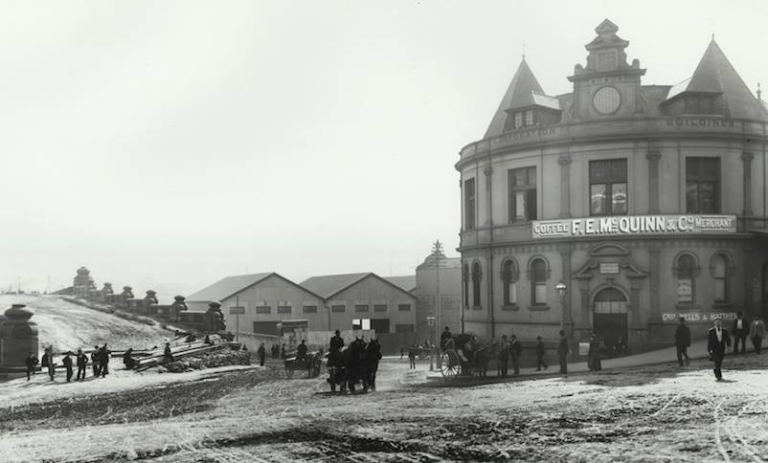
Build in 1857... oh gee whiz yes indeed :)
The area was a massive hub for ships coming in and out of the harbour... unloading their fill of products sounding in the new age of industry. Nothing like the Sydney we know today except for the fact that the unplanned sprawl is still so evident today... the way our streets wind in an odd old fashion accident of growth.
Not a grid of streets to be seen anywhere :)
— Pyrmont —
Industrial Hub
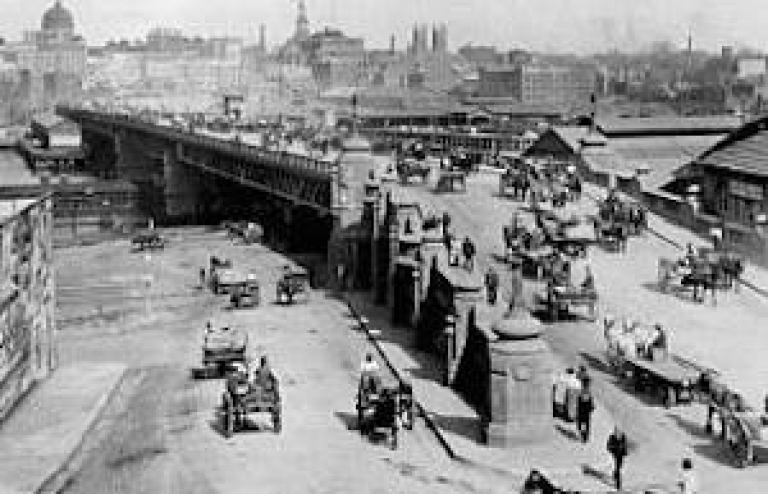
The 1870′s saw the rise of a successful wool industry in the area, with auctions being transferred from London to Sydney. By the 1890′s, wool stores, power stations and mills created employment for thousands of local residents and continued to do so until well into the 1960′s, particularly during World War II. As early as 1900, Pyrmont was the Australian centre for distribution of flour, milk, sugar and wool, and was providing Sydney with all its power for lights and trams.
As well as its thriving wool industry, Pyrmont was the home of Sydney's best sandstone, creating a highly profitable quarrying business. Some of Sydney's most reputable and well-known buildings were built using Pyrmont's yellow block sandstone, including Sydney Town Hall, the Art Gallery of NSW and the University of Sydney.
👉 Alice Gage! 👈

Jess' best friend Alice Gage will be there signing autographs and answering any questions.
• The James Craig •
Launched as Clan Macleod, was built by Bartram, Haswell & Co. in Sunderland, England in 1874. Her name was changed to James Craig in 1905. For 26 years she plied the trade routes of the world carrying general cargoes during which period she rounded Cape Horn 23 times.
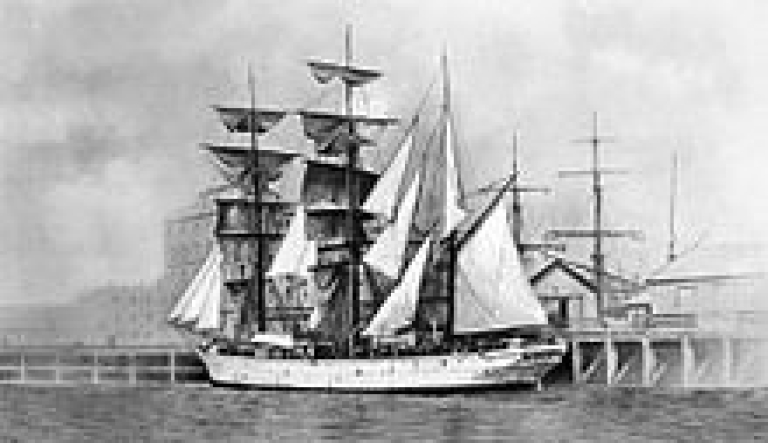
In 1900 she was purchased by Mr J J Craig of Auckland, New Zealand, who used her on trans-Tasman trade routes as a general cargo carrier. In 1911 she was laid up because increasing competition from steam ships made sailing vessels uneconomical. She was then stripped and used as a copra hulk in
New Guinea.
After the First World War there was an acute shortage of cargo ships and she was bought by the well-known Australian jam manufacturer, Henry Jones IXL. This gave James Craig a new lease of life after being towed from New Guinea to Sydney for re-fitting. Her return to service was brief because in 1925 she was reduced to a coal hulk at Recherche Bay, Tasmania. In 1932 she was abandoned and became beached after breaking her moorings in a storm. She remained beached until 1972 when volunteers from the Sydney Heritage Fleet re-floated her.
In 1973 she was towed to Hobart where temporary repairs were carried out. She was towed to Sydney in 1981 and restoration work commenced. James Craig's restored hull was re-launched in February 1997.
The 1880s
The decade of the 1880s saw a generation of children of gold rush migrants grow up, get married and start having families of their own. This time in Australia's colonial history brought about the dream for many non-Indigenous Australians of owning their own home on land that they could either farm or grow their own food on. But, realising this dream of home ownership had unexpected consequences for many settlers. The land boom led to a great 'speculative mania', as thousands of workers and investors took their money and placed it in high-return building societies, investment companies and new banking institutions. Investment returns, profits and wages became higher and higher.
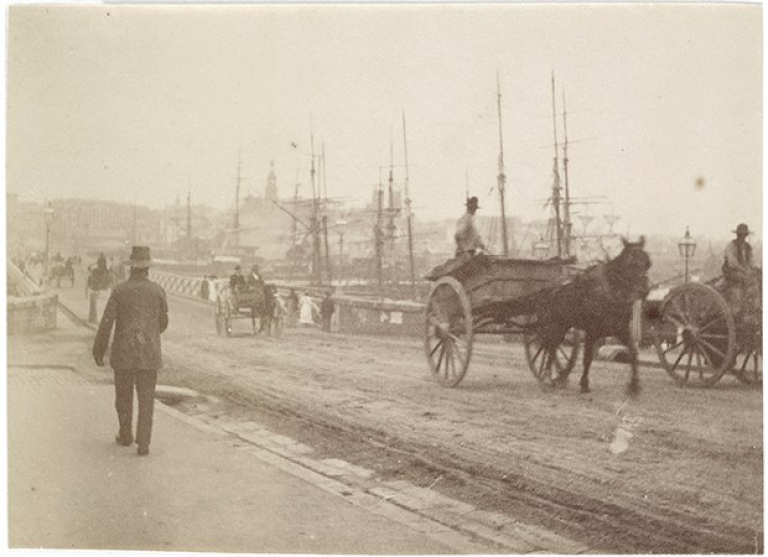
Migrants came to the colonies in the hope of making a fortune, whether from gold discoveries or in new businesses. People flocked to the cities in search of work thus creating an available labour force, and new manufacturing industries blossomed.
The society that emerged in this era was a relatively open and fluid one, in which new possibilities emerged, such as women's suffrage, the trade union movement and an electoral party for the workers. Indigenous people were being dispossessed of their land and removed from their country to reserves or missions as the land was opened up for the settlers.
In 1886, the Board for the Protection of Aborigines was given powers to make decisions governing Indigenous children's lives, removing them from their families, apprenticing 13-year-old Indigenous children and granting or denying permission to visit their families. Most of these children never saw their families again after being taken away, hence becoming known as the 'Stolen Generations'.
→ Dave Science ←

Lokie's best friend Dave Science will be testing the waters, measuring the winds and checking his sextant for the correct bearing.